Genre 2

Why is genre relevant to the audience?

  • Gives audience expectations so that they know what to expect.
  • Allows audiences to understand structure of films better - e.g. A familiar scene can trigger meaning such as when a potential victim leaves a door unlocked or goes outside at night.

How does genre affect the companies making the movie?

  • Reduces risk for filmmakers, allowing them to copy a tried and tested formula.
  • Gives them a blueprint to follow.
  • Reaching a target audience. There is already a large market for action films.

Genre 1

What is a genre, what does the word mean? Give some examples of film genres.


A genre is a specific category of film, defined by similarities in form, style or subject matter. For example: Romantic comedy, Western, Science fiction, etc.  

Name three different things that films within a particular genre might share in common?

1.
Particular soundtracks or music. Action Thrillers generally have heroic, aggressive soundtracks to reflect the action of the movie.


2. Particular actors. For example, Clint Eastwood was notorious for appearing in Westerns.

Clint Eastwood as The Man with No Name
in The Good, the Bad and the Ugly

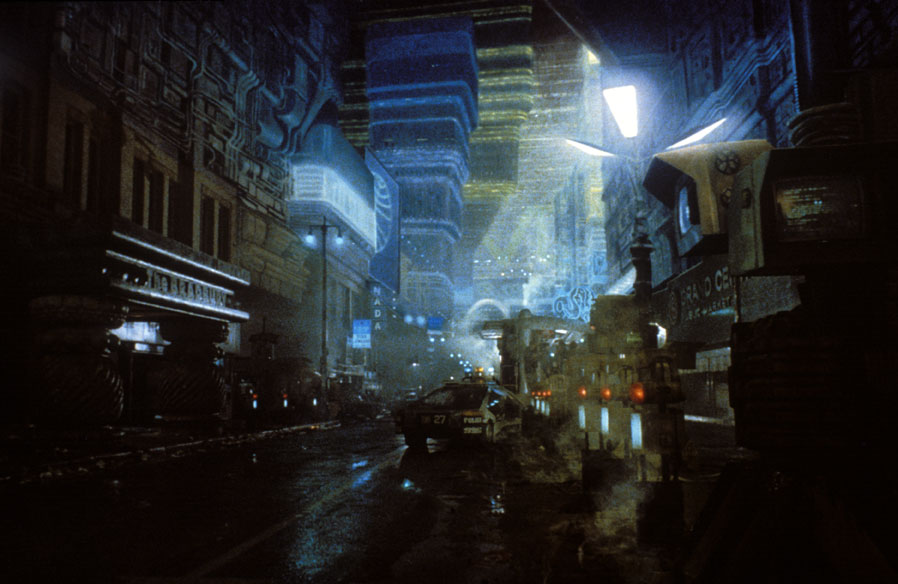
3. Particular settings or locations. Science fiction films are often set on alien planets or the future and have sets with technological, futuristic designs.

The classic 80's sci-fi film, Blade Runner is set in a
technological, dystopian future.

The Thriller genre is different from most other genres because on the surface many of them look entirely different from each other. Identify a couple of Thrillers that are very different from each other and point out some of the key differences between two of them. 

Two thriller films that are different are The Machinist - a dark, fatalistic Psychological Thriller, and Kill Bill - an intense, violent Action Thriller.

The editing in both films is very different. The Machinist favours bleak, grim lighting and slow, wide shots. The music is orchestral and harrowing, utilising stringed instruments.


Kill Bill opts for a more bright, colourful form of lighting with high contrast. The music is often energetic and cool, in keeping with the bright, violent theme defined by Tarantino films.


What do these films have in common at a more basic level (in terms of the audience response)? What do they have in common in terms of characters and narrative structure?

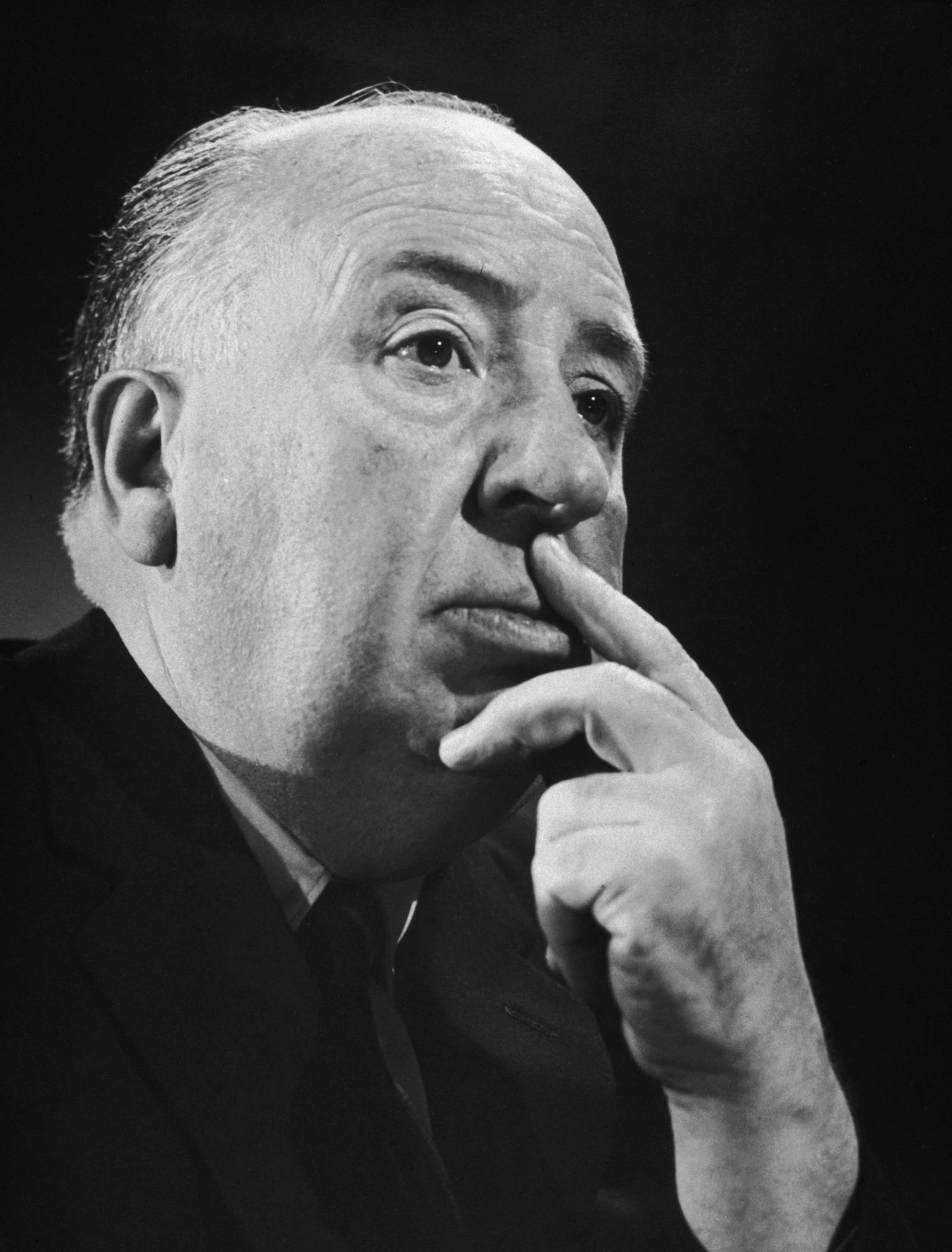
The defining features of  a thriller are suspense, tension and excitement. The suspense is usually achieved by introducing conflict. This conflict can be anything that the protagonists will have to overcome - for example, the meteor heading towards earth in Armageddon and the Xenomorph in Alien serve the same narrative purpose. Suspense and tension are huge parts of what makes a thriller. Alfred Hitchcock has often been called 'The King of Suspense" due to his expertise in creating tense, suspenseful thrillers.

Alfred Hitchcock
Within the thriller genre, there are many other sub-genres. Sub genres are more specific genres of film which still fall under the thriller category. Below are posters for horror/supernatural thriller, Insidious 2 and crime thriller, The Usual Suspects. Whilst they are both thrillers, there are clear differences between them in terms of style and tone.


There are various different sub-genres. Here are just a few of them:

- Psychological-thriller
- Comedy-thriller
- Crime-thriller
- Political-thriller
- Horror-thriller
- Spy-thriller
- Techno-thriller

The Sub-genre which appeals to me the most is the psychological thriller. I enjoy films which force their audience to think and be in a constant state of intellectual activity. I feel like they justify the idea of films as an artform rather than just entertainment. Psychological thrillers that I have enjoyed include The Machinist, Shutter Island and American Psycho.

The Stepfather - Opening Title Analysis

Here, I have done an analysis of the title sequence to the Thriller film, The Stepfather.


The film starts immediately and the text is discreetly superimposed into it. The title text is simple and minimalistic. This may be because the filmmakers do not want our attentions drawn to it. The background music is tense and suspenseful.


There is a low, rumbling drone when the camera pans down to the yellow, highlighted box saying 'CANCELLED' - the yellow colour and bold, capital text draws our attention to it and the drone lets us know that it is of significance.
The camera pans past a collection of hygiene tools. The music is dark and foreboding, building up in order to collect tension. The camera moves neatly across in a near perfectly straight line and the props are neatly laid out, clean and shiny. These facts suggest an uncanny perfectionism, or some sort of OCD. Additionally, the camera panning vertically across often suggest that it is leading to a point of significance.


The Main character walks into focus. As we see his face, there is a drone and the title creeps onto the screen. Because of this, we know that this character is significant.


The music continues as the character goes through a montage of changing his appearance. This includes dyeing his hair, shaving off his beard and applying contact lenses. The camera watches from awkward angles, making the audience feel as if they are spying on him. The camera often goes into big close-ups of his face and hands so that we can see his expression and actions. 


At one point in the montage, the character cuts himself whilst shaving. There is a small percussion shimmer as the red, foreshadowing blood drips across his chin. There is a reaction shot of his face, but his reaction is unemotional and cold, suggesting that he is perhaps used to blood or pain and generally painting him as a cold, unemotional character.


Movie Title Analysis - The Taking of Pelham 1, 2, 3

The Taking of Pelham 123 is a crime/action thriller remake directed by Tony Scott. It has a very different atmosphere from my previously analysed thriller, One Hour Photo. Whilst One Hour Photo slowly builds up tension to create a thrilling tone, Pelham is forceful and direct.


We open to a letter-box style establishing shot of an urban skyline. There is low, suspenseful music playing in the background as the credits come up in a black, bold, typical action font. 


All of a sudden, we are nearly given a heart attack as the camera quickly speeds up and zooms down onto a busy, sped up street. This abrupt change in tempo is accompanied by an upbeat rap-rock soundtrack (99 Problems - Jay Z).


In addition to this change, the format of the titles also change from black to an animated, energetic bright blue and white. The atmosphere is fast and adrenaline fueled, expressed by the fast camera movements and the fast motion.


There is a sudden change to slow motion, as John Travolta's character walks past the camera. This tells the audience that he is an important character. In terms of actor and costume, Travolta wears a black beanie, black glasses and has a tattoo on his neck. He is clearly a very thuggish, tough man who is used to action.


We are then shown what is possibly one of the quickest establishing shots in cinema history: A quick cut to a subway sign, followed by a shot of the man entering the subway. The camera is very purposefully shaky. This is a camera technique, often used to create a sense of aggression and energy (or sometimes panic and lack of control).


In it's title sequence, The Taking of Pelham uses fast camera shots to establish a lot of information in a very limited space of time. Here, we are shown a quick shot of a bag being held by a man and then a badge that he wears, reading: 'MTA' (Metropolitan Transport Authority). In the space of a few seconds, we are aware that this new character is also important and we can start to formulate ideas as to what he is doing. 


The climax of all this aggressive energy and information is the movie title which suddenly appear on the screen. As previously, the titles are regularly in time with the music. In this case, the 1, 2 and 3 burst into the shot, synchronous with three bursts of music.


------------------------------------------------------------------------------------------------------------

Also...

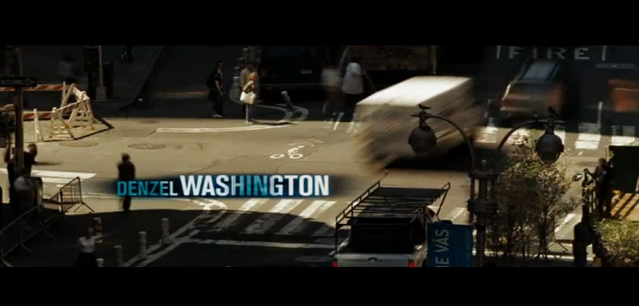
I noticed that in this shot, the dark haired guy is not wearing a headset..


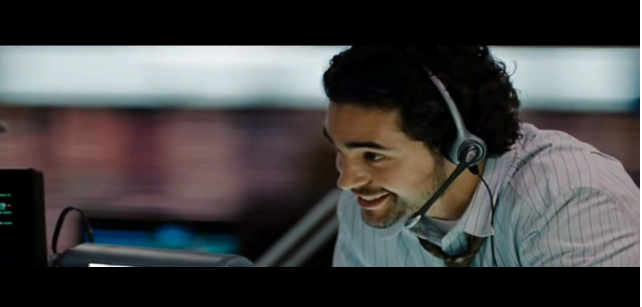
But in the shot immediately after, he is...


This is a continuity error. We were taught how to avoid them by Adam in our camera tutorial. I find it interesting and somewhat amusing that even professional film companies sometimes accidentally have continuity errors in their films.